
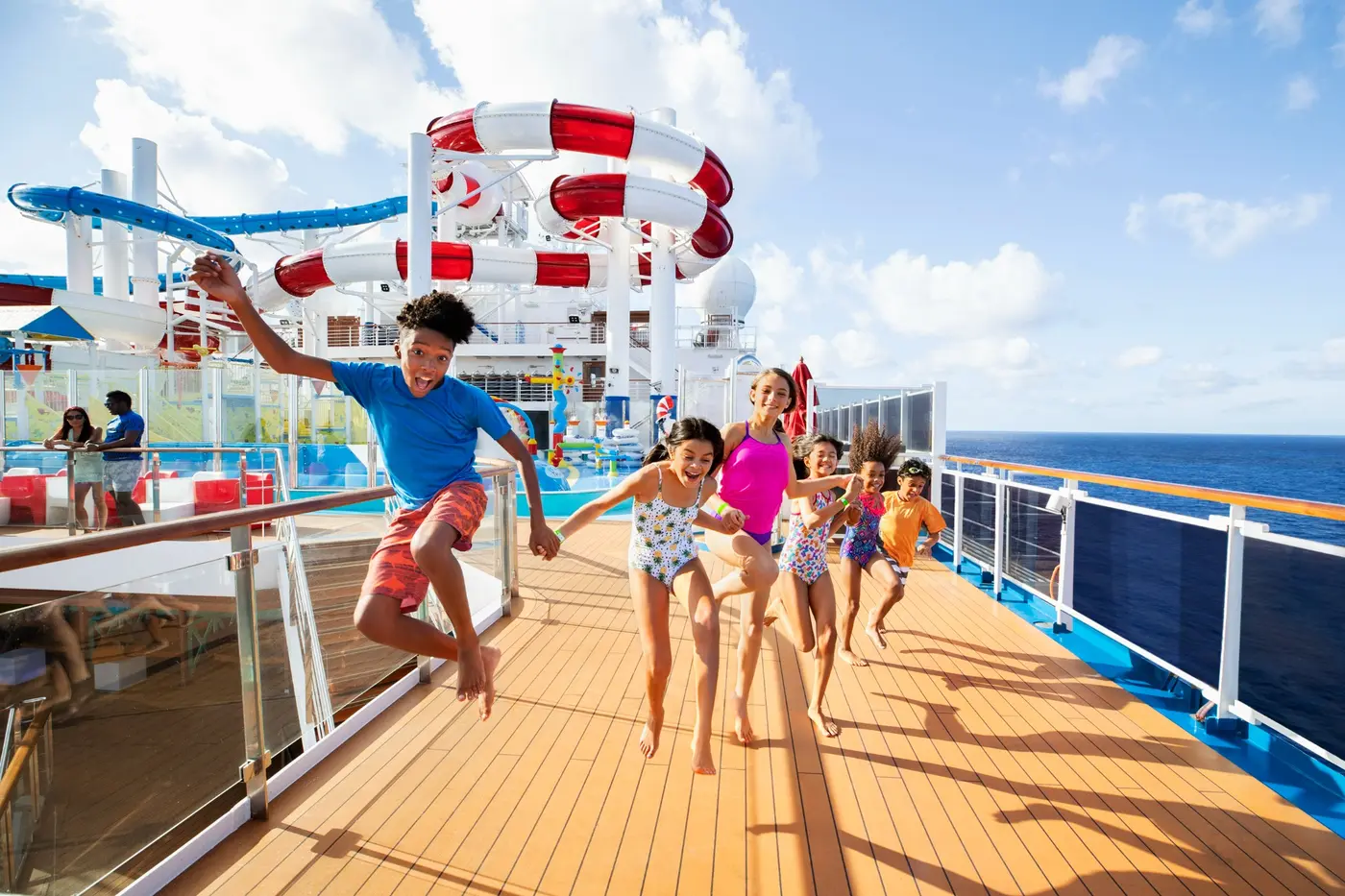
Carnival’s strongest family fit is usually a group that enjoys an informal atmosphere, plenty to do, and the flexibility to spend some time together and some time apart. The right booking depends on the ship, sailing, and room—not simply the cruise-line name.
A convenient departure port can be a major advantage. Compare the full journey, including flights or driving, a pre-cruise hotel, transfers, and parking. A lower cruise fare is less useful if getting to the ship adds cost and stress.
Start with the Ship, Then Compare the Fare
Start with the three features your family would use most. That might be a waterpark, youth spaces, casual dining, or a particular room arrangement. Verify them on the current page and deck plan for the exact ship.
Carnival’s WaterWorks configurations vary by ship. A photograph from one vessel should not set expectations for another. Check restrictions too: height and weight rules apply, and WaterWorks requires children to be toilet trained, with no diapers or swim diapers.
Newer and larger ships can offer more choices, but an older ship may be the better booking if it has what you need and sails from an easier port. Compare the experience your family will use rather than paying for features that will not matter to you.
Choose a Sailing That Fits Your Pace
A short cruise is a manageable introduction when you are unsure about being at sea or have limited time. It also leaves less time to settle in. A longer sailing can give children a more familiar routine and adults more flexibility about when to enjoy activities.
Compare sea days, port times, and travel before and after the cruise. Do not assume every port needs a full-day excursion. One substantial outing followed by a simpler day can work better than a tightly booked schedule.
The atmosphere also changes with the departure and season. Ask about the likely fit for your dates if quiet evenings or school-age companions are priorities, while remembering that no one can guarantee the passenger mix.
Choose the Room at Bedtime
Look at the room as it will be used after all beds are open. Confirm who sleeps where, whether upper berths are suitable, and how everyone reaches the bathroom. Occupancy alone does not tell you whether the space will be comfortable.
Compare one larger room with connecting cabins where available. Extra space and a second bathroom can be valuable for older children or a multigenerational group. Confirm an actual connecting door if that is essential; neighboring cabins are not the same arrangement.
Check what is above and below the cabin, how far it is from the areas you expect to use, and any accessibility requirements. If a family-focused room category appeals, verify its specific benefits on that ship before paying more.
Youth Programs by Age
| Program | Current age range | Planning point |
|---|---|---|
| Camp Ocean | 2–11 | Core programming is included; children are grouped by age |
| Circle “C” | 12–14 | A place for younger teens to meet and join activities |
| Club O2 | 15–17 | Older-teen activities and social space |
| Night Owls | 6 months–11 years | Additional-cost evening care; confirm current sessions and availability |
Camp Ocean’s age groups are 2–5, 6–8, and 9–11. Register and attend the introductory opportunity so children can see the space and meet staff. Review the operating schedule, pickup rules, and any support needs rather than assuming the program will fit every hour of your plans.
For a child under two, ask about the exact services available on the sailing. Do not treat Night Owls as a promise of all-day infant care. Separately confirm the cruise’s minimum sailing age and any itinerary-specific restrictions before booking an infant.
Youth programming should be an option, not a condition for the adults to enjoy the trip. Some children settle in quickly; others prefer short visits or family activities. Leave room for either response.
Water Activities Need an Age Check
Review the rules for each pool and attraction before booking a water-focused vacation. Carnival’s pools also prohibit diapers and swim diapers. A toddler who loves swimming at home may have fewer options onboard than the promotional photographs suggest.
For older children, check attraction eligibility and explain that weather or operational conditions can affect availability. Plan other activities so a closed slide does not determine the whole day.
Decide who is supervising at the pool and where the family will meet. Youth-club participation and water supervision are different arrangements.
Know What’s Included and What Costs Extra
Review the ship’s dining list and identify the included choices you expect to use. Then decide whether any specialty meals would improve the trip. Restaurant availability and charges differ by venue and ship, so compare the actual booking rather than a general list of Carnival restaurants.
Choose a dining pattern around the family’s normal appetite and evening plans. A consistent mealtime can be useful with young children; a more flexible approach may suit a group returning from different activities. Check availability when arranging the reservation.
If anyone has an allergy or dietary requirement, contact Carnival before sailing and speak directly with the dining team onboard. Avoid treating a menu label or an app as a substitute for that conversation.
Look at the Total Trip Cost
Add the likely extras before comparing cruises. Depending on what you choose, these can include gratuities, drinks, specialty dining, internet access, paid childcare, arcade play, selected attractions, excursions, and transportation.
Price packages against what each eligible traveler would actually use. Check participation requirements, exclusions, and service charges. A package can simplify spending, but it does not automatically save money for every family.
Give older children clear spending expectations. Decide which purchases require permission and review the account during the cruise. That is easier than trying to reconstruct the budget on the final evening.
Prepare for Boarding and Port Days
Complete Carnival’s current check-in steps, confirm required documents for every traveler, and follow the arrival instructions in your booking. When flying, allow a buffer before embarkation rather than relying on a same-day flight arriving exactly as planned.
Carry essential medicines, documents, chargers, and anything the family needs before checked luggage arrives. For excursions, read the activity requirements and transport times, and leave a clear return margin if you arrange your own day ashore.
Discuss mobility, sensory, and other support needs with Carnival before committing to a cabin or tour. A suitable stateroom does not guarantee a suitable gangway, tender, vehicle, or excursion route.
Our Recommendation
Shortlist two or three exact sailings with the facilities your family wants, then compare the room and complete trip cost. Carnival can be a practical choice when its casual style fits and the travel logistics are straightforward.
If the adults want a quieter setting or the children need a feature that the ship does not offer, consider another sailing or line. A good-value cruise is one your family will enjoy as it is.